Imagine you're at a networking event and speaking with another business owner. The talk turns to websites. They ask, "What does a decent website cost these days?"
It's a question I've been asked several times. People often want to know how much do websites cost.
Cost depends on what you want, on what sort of website you want. So I say, "It depends." And yet, for the sake of conversation, I give a ballpark figure that I hope lands somewhere near the middle of the range: "Between five and fifteen thousand, in my experience." This usually ends the conversation.
A CEO once told me with a sense of pride that they only paid £150 for their website. Of course, I later visited the site and saw that it was terrible, poorly designed, lacking in functionality, and filled with problems. He might say that they had something up and running, but can anyone really expect a website that costs so little to be of any decent quality, to provide any kind of support, or to have any kind of longevity?
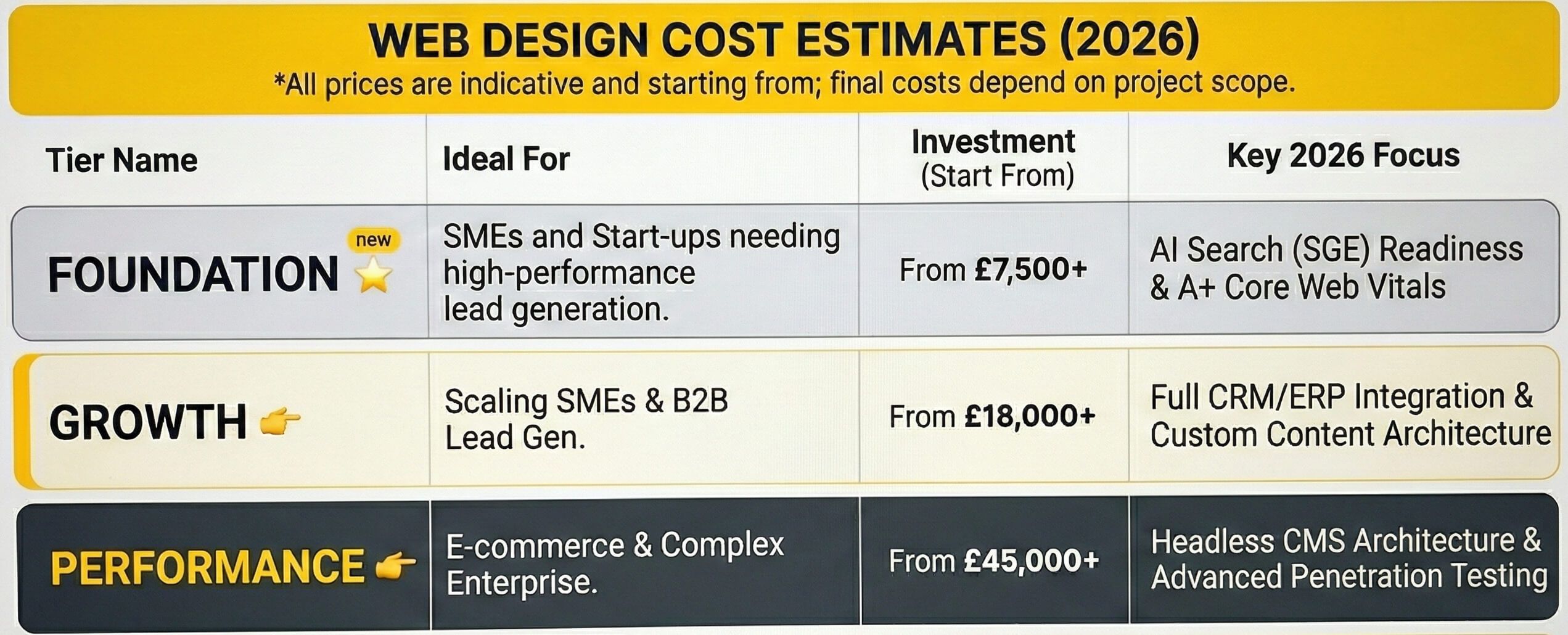
What I believe is that it’s better to make an investment at the outset than to have to pay double to ensure things are done correctly. So, let's explore the various pricing options and consider how much does a new website cost in 2025.
The cousin or “mate around the corner”
We have all had experiences like this. A friend offers up a relative who "knows computers" and is willing to design a website for £50. A total steal in your mind. You think to yourself, "Sure, why not?" And in that moment, you think your friend's cousin is not someone who you would actually trust to do critical tasks for you, like fixing a car or cutting your hair. So why would a person whose mind works like that trust a friend's cousin to do a critical task like designing a website?
In reality, these websites often appear amateurish, are not very sturdy, and can easily become much more expensive over time. Especially when you inevitably have to pay someone to fix a long list of problems.
Do-it-yourself website builders (the low cost choice)
Next up is the least expensive choice. DIY website builders such as Wix, Squarespace, and WordPress.com have made it super simple to create and launch a site with minimal effort. For their subscription plans, these services charge anywhere between £5 and £50 monthly. Not bad, right? But there’s a big drawback.
What do you actually get?
- Hosting – this is something they handle for you
- Templates – you choose from a wide selection of designs
- Basic features – think simple e-commerce, basic blogging tools, and a pinch of SEO
Building your own website using a do-it-yourself platform is like purchasing a ready-made meal from the supermarket. It’s quick and easy, and more or less gets the job done. But if you've tried those meals, you know they aren't ever as good as something made from scratch.
Who’s this for?
This may be sufficient if you're a small business owner or an individual exploring the online world. However, if you want a website that genuinely represents your brand, you may soon start to feel the constraints. Eventually, you’ll run into issues that drive up your website development cost.
WordPress from simple to customised solutions
Let’s turn our attention to WordPress, which is still the most popular choice. Here, you have three options. Use the built-in themes, get a premium template from somewhere like Template Monster, or go for fully custom templates.
What do you actually get?
- Default theme. WordPress comes with a basic theme like "Twenty Twenty-Four" and it’s free. But it looks like a default theme. Like putting on an off-the-rack suit
- Cost. You won’t pay for WordPress itself, but you will need hosting. Expect around £3 to £20 a month
- Templated theme. Premium themes cost between £30 and £100 and give you more control over the design
- Custom WordPress design. Hiring a professional to build something bespoke can cost between £2,000 and £20,000
Who’s it for?
If you want something that grows with your business and reflects your brand properly, this is the best route. It’s not cheap, but it’s worth it. Many business owners start asking, how much does it cost to design a website UK businesses can actually rely on. This is the type of build that answers that question.
Freelancers, the in between option
Hiring a freelance web designer is like being served a proper home cooked meal. It’s not quite restaurant level, but it’s better than anything you could throw together yourself. Expect to pay £500 to £5,000 depending on the brief and the designer’s experience.
What do you get?
- Custom design. You’ll get a layout and structure made just for you
- SEO setup. Many freelancers include the basics to get you started
- Responsive design. Your site should look good on mobiles, tablets, and desktops
Who’s this for?
This is a solid middle ground for businesses that want something decent without the agency price tag. Just make sure to check their portfolio first. If you're wondering how much do you charge to design a website, most freelancers will provide quotes based on the complexity and features.
The agency experience, top of the range
If you want the full package, strategy, branding, design, development, you need a professional agency. You can expect to pay £5,000 to £50,000 or more. Think of it like hiring a team to build your dream home.
What do you get?
- Bespoke design. Built to match your brand completely
- Advanced functionality. Custom features, e-commerce, and integrations
- Ongoing support. You won’t be left on your own when changes are needed
Who should consider this?
If you’re serious about growth and your digital presence, this is the route to take. Agencies are often best placed to explain modern web design costs 2025 and plan around your business goals.
E-commerce websites, a bit more complex
Thinking of selling online? Then it’s essential to understand what an e-commerce website costs. Basic setups start at £1,000 and can go well over £10,000. Complex builds may reach £100,000.
Platforms like Shopify start at £29 a month. But costs quickly rise with third-party apps, payment systems, and customisation. This is when people realise how much does a website cost is not a fixed number, especially for online shops.
Why do website costs vary so much?
Because the detail matters
- Complexity. More pages and features will raise the price
- Design. Templates cost less. Custom design costs more
- Functionality. Extra features like booking systems, payment gateways, or member areas all come at a price
- Content creation. If you need help with text and images, you might spend £500 to £5,000
- SEO. Professional SEO strategies can cost £500 to £5,000 per month
So if you’re wondering how much does it cost to design a website, remember to factor in what you actually need it to do
The myth of "SEO optimised" cheap websites
You’ve probably seen the promise. "Our websites are SEO optimised." But most of the time, it just means they’ve installed Yoast and ticked a few boxes. That’s not strategy. And it’s definitely not long-term optimisation.
Why “you get what you pay for” rings true
This saying has never been more relevant. There are cheap options out there, but they rarely deliver the quality or return you need. Think carefully before chasing the lowest bid. You should understand website design costs and ask yourself, how much do websites cost UK wide when done properly.
A website is more than a business card. It’s often the first impression you make. So whether you're going the DIY route, hiring a freelancer, or investing in an agency, make sure you know what you’re getting, and what you're not.
At the end of the day, your website is more than an expense. It's a statement of intent. It's part of your growth, your brand, and your future.
If you're ready to invest in a website that actually works for your business, contact us to get started.