If you run a small business, the appeal of AI design tools is obvious. You need a poster for your window, a flyer for the weekend market, some graphics for Instagram... and you need them yesterday. Hiring a designer feels like a luxury. So you open an AI engine, type a prompt into an image generator, and thirty seconds later you've got something that looks, well, fine.
We get it. Nobody starts a business because they love making flyers, and when the marketing budget is basically whatever's left after everything else, free and fast is hard to argue with.
But "fine" is doing a lot of heavy lifting in that sentence. AI-generated posters come with problems that aren't obvious until they've already cost you: in customers, in credibility, and in some cases, in designs you don't even legally own. Here's what small business owner should know before hitting generate.
Why small businesses are turning to AI design tools
Let's be honest. Professional design has traditionally been priced for businesses with marketing departments, not sole traders juggling stock, staff and a mountain of admin. AI tools promise to close that gap: no design skills needed, no waiting, no invoice.
And for some things, they genuinely help, which we'll come to that later. The trouble starts when AI-generated images become the public face of your business. Because your customers are paying more attention than you might think.
The hidden problems with AI-generated posters
Your customers can tell, and it changes how they see you
The biggest myth about AI-generated marketing is that nobody notices. The research says otherwise.
A study by digital asset management company Bynder found that half of consumers can correctly identify AI-generated content. Millennials, aged 25 to 34, were the best at spotting it.
Here's the part that should give any business owner pause. When people suspect your marketing is AI-generated, it actively damages how they see your brand. In the same study, 25% of consumers said AI-generated social content made a brand feel impersonal, 20% saw it as untrustworthy, another 20% thought the brand was lazy, and 19% considered it uncreative. Worse still, 52% said they disengage from content they suspect came from AI.
Think about what that means in practice. The poster that cost you nothing to make could be quietly telling half your potential customers that you don't care enough to do things properly. For a small business, where so much trade runs on personality and trust, that's an expensive kind of free.
And this isn't a generational quirk that will fade. Getty Images' global research found that 98% of consumers agree authentic images are pivotal in establishing trust — and 76% say it's getting to the point where they can't tell whether an image is real at all. In a world drowning in synthetic visuals, looking genuinely human is becoming a competitive advantage.
You might not actually own "your" design
This is the problem almost nobody sees coming.
Under current copyright thinking, images generated entirely by AI generally can't be copyrighted, because copyright protection requires human authorship. A US federal court confirmed this in 2023, and while the UK's position is still being worked out, the Government has been consulting on AI and copyright, with the creative industries pushing back hard, the practical reality for now is deeply murky.
What does that mean for you? Potentially, that the poster you've plastered across your shopfront, your website and your van isn't legally yours in any meaningful sense. A competitor could generate something nearly identical, or simply reuse yours, and you'd have very limited recourse. There's also the reverse risk: AI tools are trained on millions of existing images, and if your generated poster comes out looking a little too much like someone else's protected work, you're the one whose name is on the flyer.
When a professional designer creates your artwork, the ownership is clean. It's yours, in writing, forever.
Quality issues that hurt your brand
AI image generators have improved enormously, but they still fail in ways that matter for real-world marketing:
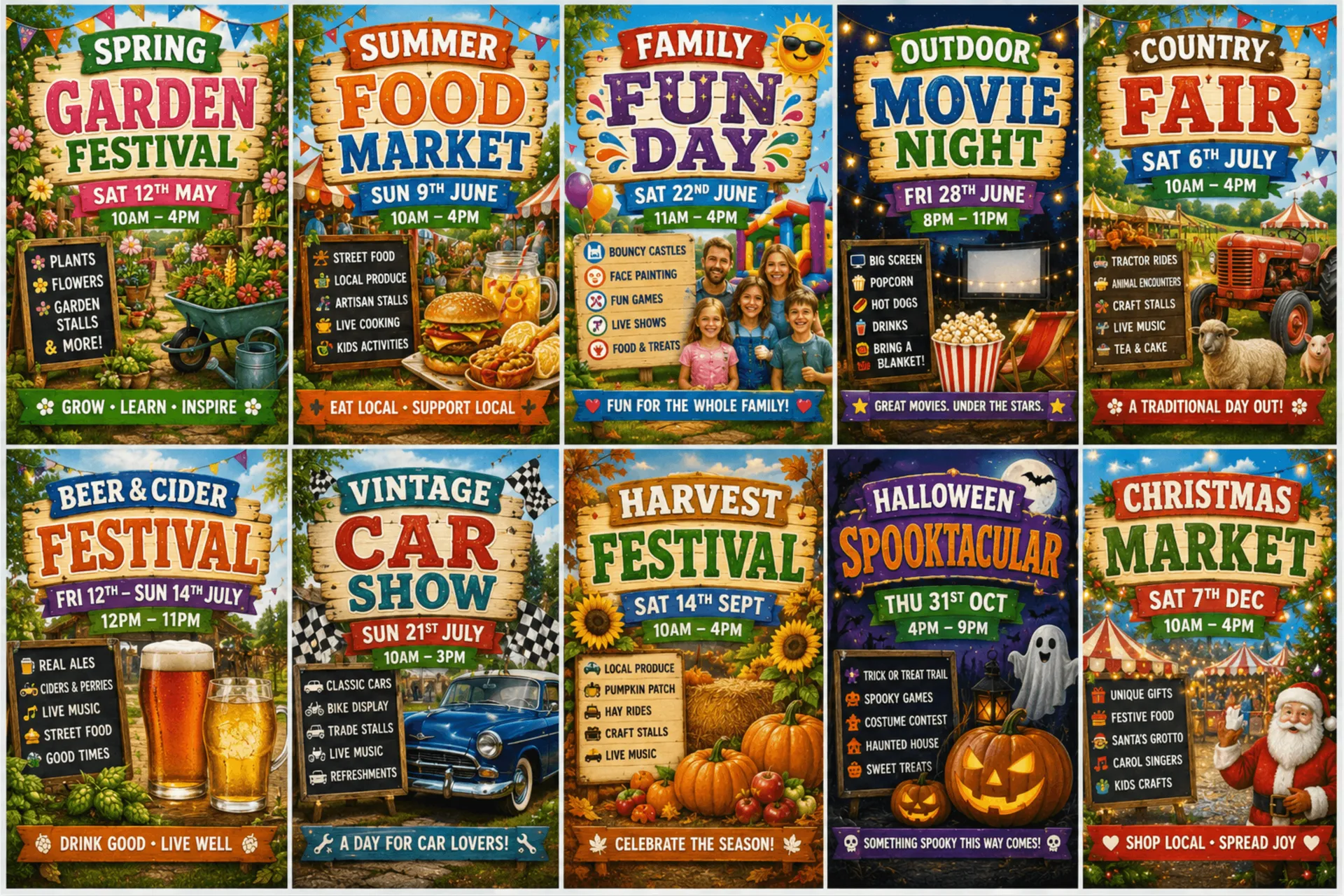
- Garbled text: AI notoriously mangles lettering; and on a poster, the words are usually the whole point. A phone number with a warped digit isn't a design flaw, it's lost business.
- Wonky details: Six-fingered hands, melting logos, chairs with five legs. Small on screen; glaring at A2 size in your window.
- Print problems: AI tools output screen-resolution images with no understanding of bleed, margins or CMYK colour. What looks crisp on your laptop can print blurry, with colours that miss your brand entirely.
Brand inconsistency across your marketing
Even when each individual AI image looks decent, they rarely look like they belong together. One poster comes out sleek and corporate, the next whimsical and cartoonish, because that's what the prompt happened to produce. Consistency, same colours, same feel, same personality every time a customer encounters you, is what makes a small brand memorable. It's precisely what AI generators are worst at.
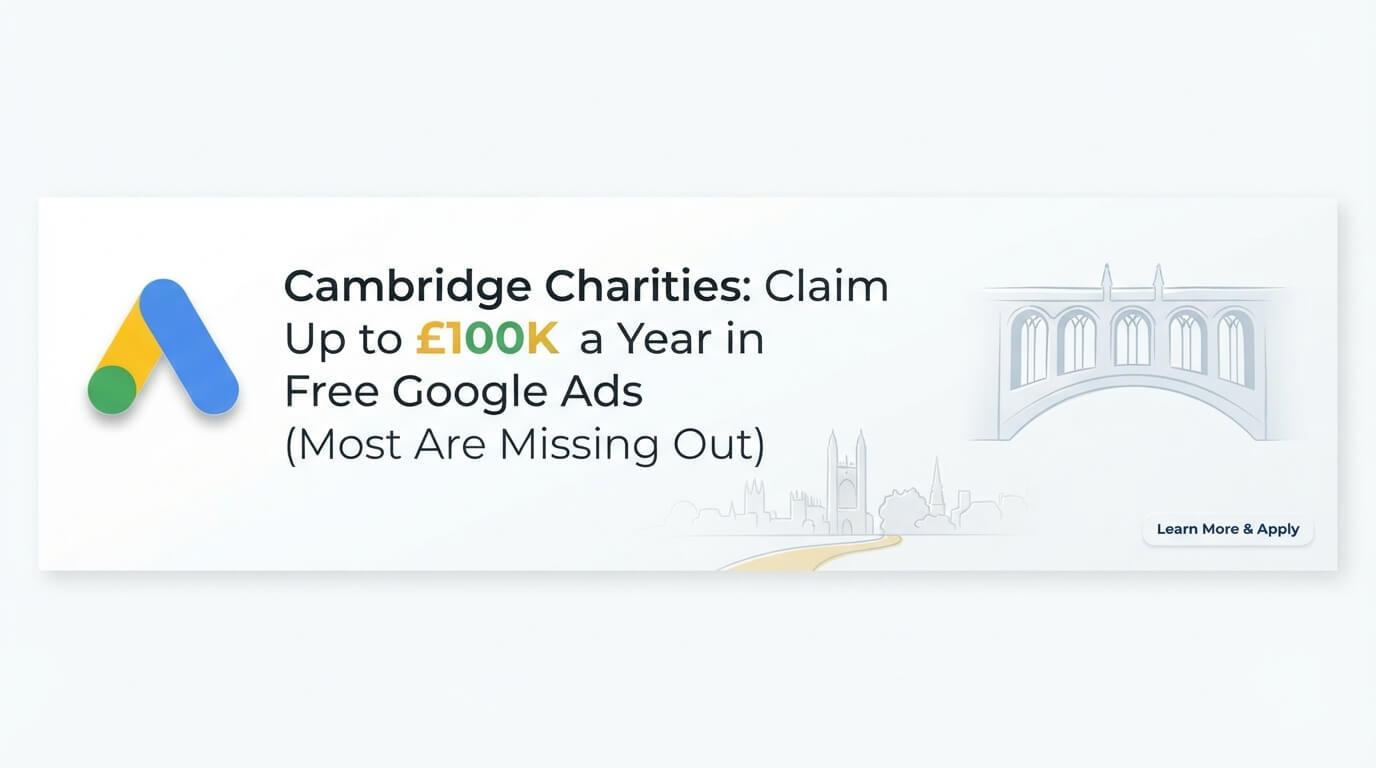
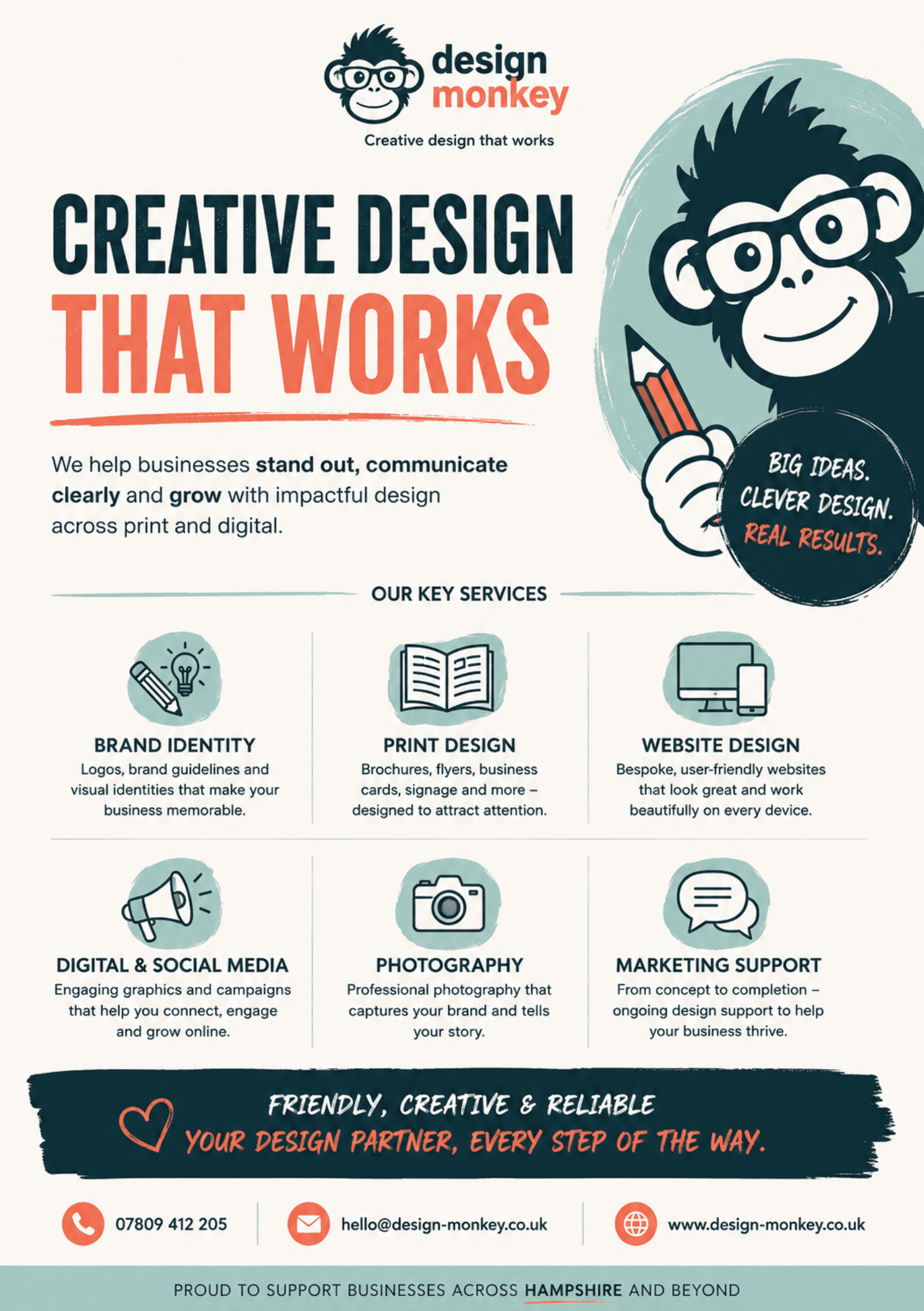
For example, I asked AI to create a poster for our services, and this is what it made. Different logo, font, phone number and even services. If you saw that around, you probably wouldn't make the correlation between us and the poster.
Can I get in trouble for using AI-generated images?
For most everyday uses, you're unlikely to face legal action, but the risk isn't zero, and it's growing. If an AI image reproduces recognisable elements of copyrighted work, or depicts a real person, you could face a claim. Meanwhile, disclosure expectations are rising: UK research from Statista found that 68.5% of 18–24s believe brands should always disclose their use of AI-generated content, increasing to 77% among over-65s. And a separate study of 1,000 UK consumers by the Nuremberg Institute for Market Decisions found that once content is labelled as AI-generated, people rate it as less natural and less useful, and are less willing to buy.
When AI tools are fine to use
We're definitely not anti-AI, far from it. Used well, these tools are brilliant for:
- Mocking up ideas before briefing a designer ("something like this, but for a bakery")
- Brainstorming concepts, colour directions and layouts
- Internal documents that customers never see
AI is a great sketchpad. It's just a risky finished product. Professional design on a small business budget
The cost of design isn't the invoice, it's the invoice minus what bad design costs you. One professionally designed poster that builds trust, prints properly and legally belongs to you will outperform ten AI-generated ones that quietly make half your audience switch off.
Good design is also more affordable than most small businesses assume, especially when a designer builds you consistent, reusable brand assets rather than one-off graphics you have to regenerate every time.
None of this means AI is off the table. Used well, it's brilliant for speeding up ideation, roughing out concepts, and getting you to a starting point faster. The trick is knowing where AI ends and proper design begins... and that's where we come in. If you want to make AI work harder (without your posters giving the game away), get in touch with our team to discuss the full capabilities for your business!