If you've noticed your website traffic behaving strangely over the past year, fewer clicks despite decent rankings, a dip in organic visits you can't quite explain... you're not imagining it. Search is changing faster than at any point in the last decade, and most businesses haven't caught up yet.
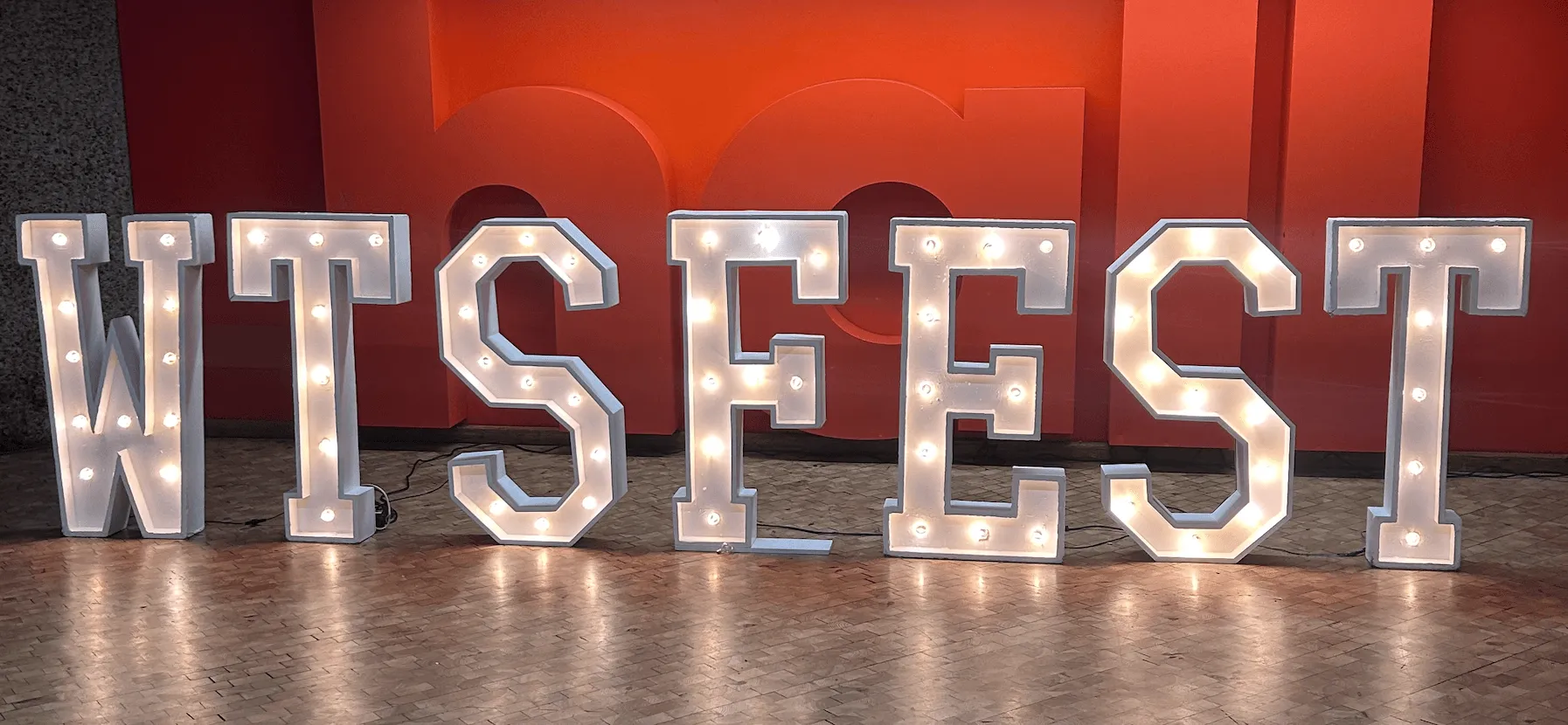
WTSFest London brought together some of the sharpest minds in search to make sense of where things are heading. Whether you attended or not, this article explains the most important lessons for marketers and business owners who need to understand how search behaviour 2026 is changing and what to do about it.
Why 2026 is a Turning Point for Search
For years, the rules and core principles of SEO were relatively stable. You found keywords your audience was searching for, you created content around them, you built links, and Google rewarded you with traffic. The model made sense because Google's job was to point people towards websites that could answer their questions.
That model is now being called into question.
AI-powered features, most notably the Google AI Overview, have changed what the search engine results page (SERP) looks like. Instead of a list of ten blue links, users are increasingly presented with a synthesised answer at the top of the page, generated by AI from multiple sources. For many queries, there's no compelling reason to click through to any website at all.
Google still commands over 93% of the UK search engine market, so its decisions have an outsized effect on every business with an online presence. And right now, those decisions are prioritising the on-page experience of the search result itself, not the traffic that results might send your way.
This is part of the core changes at the heart of search in 2026.
What WTSFest London Taught me About the Future of Search
WTSFest has earned a reputation for being an event with honest, forward-thinking empowering SEO conversations. This year, a lot of the discussions throughout the day focused on where search is now, rather than where we'd like it to be. This meant we ended the day with actionable ideas alongside industry insights.
A recurring theme across sessions was the need to reframe what success in search even looks like. Speakers challenged the idea that organic traffic is the primary metric worth optimising for. Visibility, being mentioned, cited, or summarised by AI systems, is increasingly becoming a parallel goal that sits alongside traditional rankings.
One of the most interesting presentations was from Zoe Burke, who explained her mnemonic PURPOSE, which focuses on making content work harder. This empowering talk pushed the idea of questioning how the content would benefit the marketing strategy and not following irrelevant trends. It also highlighted that with the current changes in search, evergreen content is dead, with focus now lying in constant evolution in articles and across socials. This was insightful as it highlighted how research goes further than keywords. bAs users increasingly ask full questions rather than type keyword strings, a behaviour accelerating thanks to voice search and conversational interfaces, such as Chat GPT, content needs to reflect how people actually speak and think, not how a keyword research tool clusters phrases.
Another insightful talk came from Victory Umurhurhu-Michael, who, in her talk, explained how the search wars have changed, with Reddit now being used in the mainstream. In her talk, Victory explained how brands can carefully and successfully engage with potential customers within SubReddits, while adhering to the rules. The importance lies in building trust, by observing the posts and comments to study the community. Her Reddit strategy is something I am excited to implement in client strategies to build credible outreach with relevant audiences.
The Rise of AI-Driven Search Engines
Traditional search connected intent to destination. Answer engines attempt to resolve intent directly, within the results page itself. For informational queries "what is SEO", "how does SEO work", "which is better, SEO or Ads", this often means the user's question is answered without them ever visiting a website.
This has implications for content strategy. Brands that built their organic presence primarily on high-volume informational content are feeling the impact first-hand. Meanwhile, businesses whose content addresses genuinely complex, specific, or transactional needs, the kind of content where a user needs to go deeper, book something, or speak to someone, are finding their traffic more resilient.
Zero-Click Searches: What They Mean for Traffic and Leads
Zero-click searches, queries that are resolved on the results page without a user clicking through to any website, are not new, but their prevalence has grown with the introduction of AI features.
The honest answer to "what should we do about zero-click searches?" is that it depends on what those searches represent for your business. If someone searches for your opening hours and gets the answer directly from your Google Business Profile, that's a zero-click search, but it's also a win. If someone searches for a problem you solve and gets a complete answer from an AI Overview, that's more complicated.
The businesses navigating this well are those thinking carefully about which searches they want to appear in and why. They're prioritising content that moves people through a decision, content that has to be experienced on their website, not just summarised by an AI.
They're also investing in brand visibility across the web, because brand mentions, citations, and structured data help signal to AI systems that a business is a credible and authoritative source, even when no click occurs.
How Businesses Should Adapt Their Content Strategy
The shift towards AI-driven search doesn't mean content marketing is dead. It means that generic content, the kind designed to rank rather than to genuinely help, has a much shorter shelf life than it used to.
Here's how the businesses are adapting.
They're auditing existing content. Content that ranks but drives no meaningful engagement, or that could be summarised entirely by an AI, is being retired, consolidated, or substantially rewritten. The goal is a smaller body of content that earns its place.
Original research, surveys, data analysis, and expert commentary are all forms of content that AI systems cannot generate from scratch. These form the foundation of a content strategy that remains visible and citable as search evolves.
They're also thinking about brand search. When someone searches directly for your brand name, that's a signal of trust and awareness that no algorithm change can take away. Building brand recognition through channels beyond search, PR, social, events and partnerships are becoming a strategic priority again after years of heavy reliance on organic traffic.
Finally, they're doubling down on conversion at every touchpoint. If fewer people are landing on informational content from organic search, the content that does drive visits needs to work harder. That means clearer calls to action, stronger positioning, and a more deliberate user journey.
Actionable SEO and AI Search Tactics for the Next 12 Months
Drawing on the conversations and insights from WTSFest London, here are the most important actions businesses can take right now.
Audit for EEAT: Review your most important pages with fresh eyes. Does the author's expertise come through? Are claims backed by credible sources? Is the content recent and accurate? Fix the gaps before they cost you visibility.
Create content AI can't replicate: Prioritise original data, expert interviews, case studies, and first-hand perspectives. If your content could have been written by a language model using publicly available information, it's at risk.
Optimise for featured in AI answers, not just rankings: Structure content clearly, use headers and concise paragraphs, answer questions directly, and include structured data markup. These are the signals that help AI systems attribute and cite your content correctly.
Diversify your traffic sources: Relying on organic search for the majority of your website traffic is a strategic vulnerability in 2026. Build your email list, invest in social media presence, pursue PR opportunities, and explore partnerships that drive direct referral traffic.
Monitor brand visibility, not just rankings: Set up tracking for brand mentions, unlinked citations, and the appearance of your content within AI-generated summaries. This is where search visibility is increasingly being measured.
Consider using Reddit: The CMA's proposals around AI summaries and publisher opt-outs may take time to resolve, but they signal a changing environment. Stay informed, and be ready to make strategic decisions about where and how your content appears across search platforms.
Think long-term about trust: In a search landscape saturated with AI-generated content, genuine expertise and transparency are differentiators. Businesses that invest in building real authority through quality content, credible partnerships, and consistent delivery will be in the strongest position as search continues to evolve.
The Bottom Line
Search in 2026 is more complex, more competitive, and more uncertain than it was even two years ago. The businesses that thrive will be those that resist the temptation to chase short-term tactics and instead build something more durable: genuine authority, distinctive content, and a search strategy that doesn't depend on any single algorithm staying the same.
WTSFest made one thing very clear: the era of passive SEO, publish, rank, profit, is over. What comes next requires more creativity, more originality, and a clearer understanding of what your audience actually needs from you.
That's a harder game to play. But it's also a fairer one, and you don't have to play it alone.
Ready to Future-Proof Your Search Strategy?
At Design Monkey, we help businesses adapt to the changing search landscape with SEO packages built around what actually works in 2026, not outdated tactics.
Whether you're looking to improve your EEAT signals, optimise for AI-driven search results, or build a content strategy that drives real leads, we'd love to talk through what's possible for your website.
Get in touch with the Design Monkey team today to discuss an SEO package tailored to your business goals. We'll take an honest look at where you currently stand in search and map out a clear path forward.